
Hardware engineer for things thatmove themselves.
Senior honors double major (EE + ME) at Santa Clara University, translating an EV power-electronics stack into autonomous drone and aerospace hardware.
The same stack that runs an EV — battery, BMS, thermal, control, sensors — runs a drone.
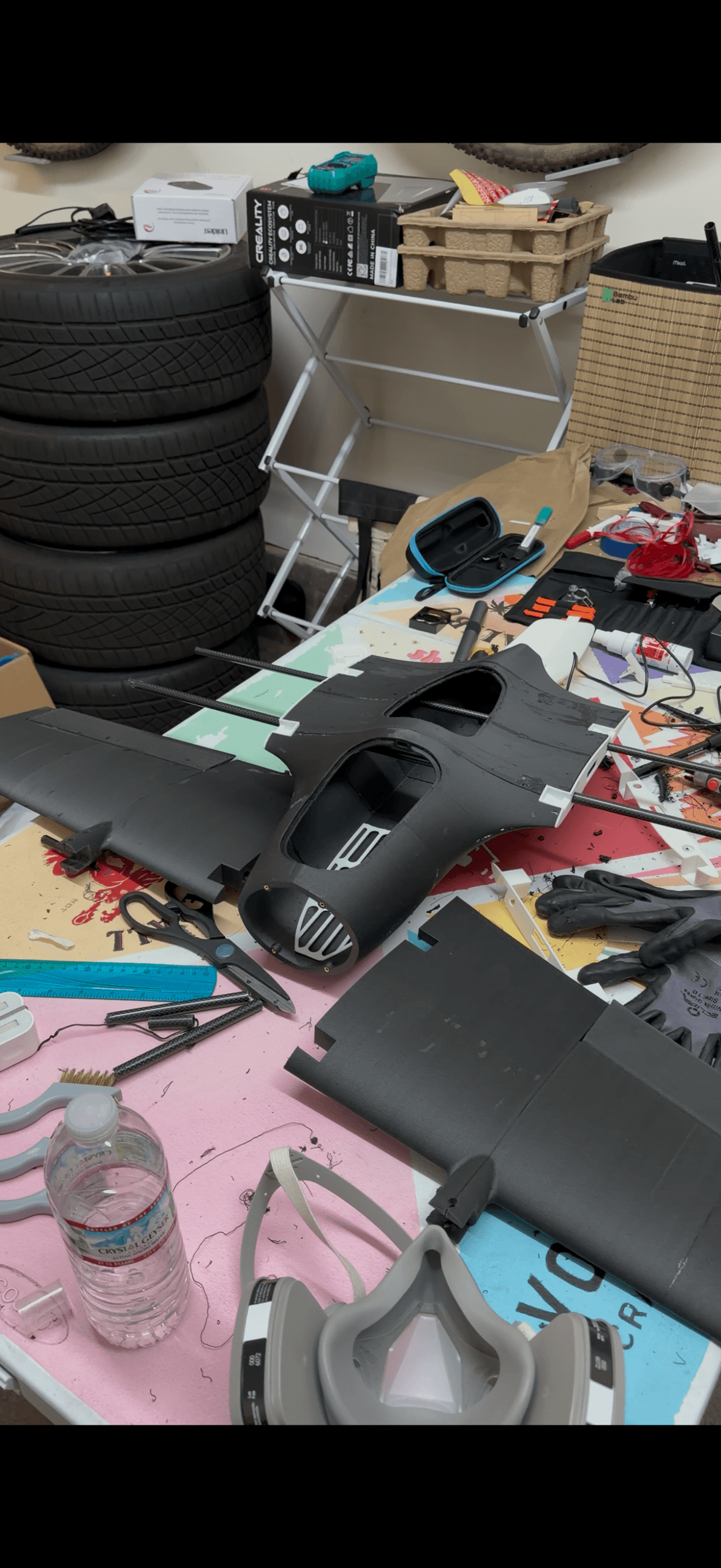
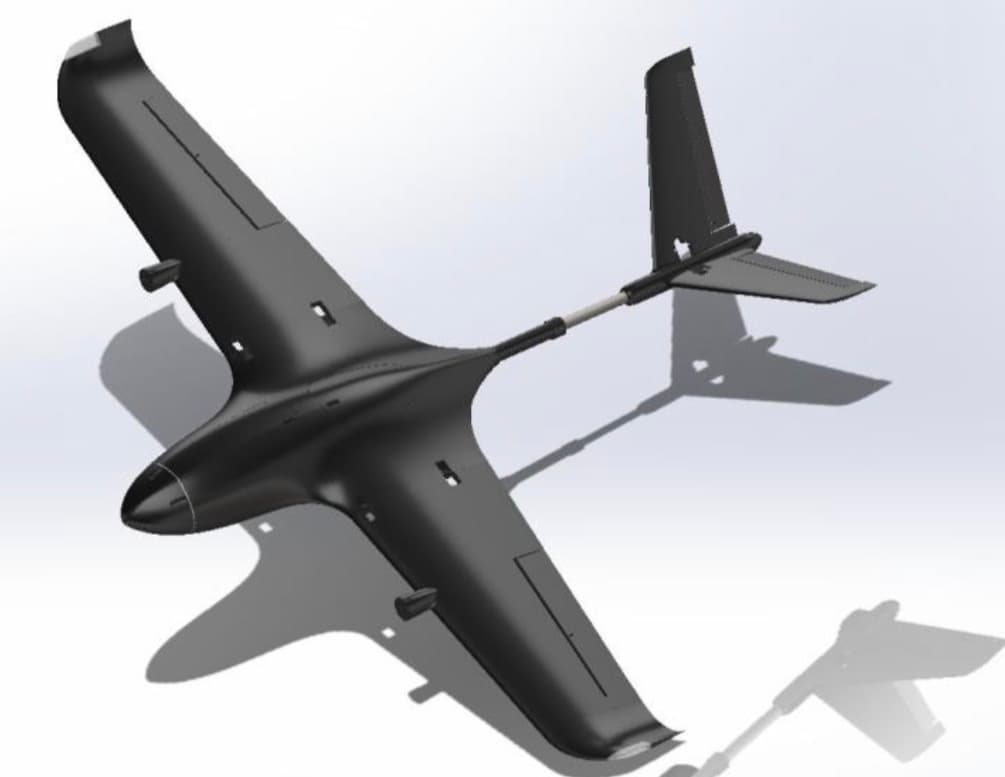
I'm building the hardware spine for autonomous flight. Cells, busbars, BMS, motor drives, IMU and lidar fusion, vehicle control. The work I've done on FSAE traction packs and STMicro motor-drive validation maps directly onto eVTOL propulsion, swarm coordination, and aerospace-grade power electronics. Raven is the proof — an 8-stage roadmap from single-tilt-rotor airframe to a 4-drone autonomous swarm.
About
Hardware engineer translating an EV power-electronics stack into autonomous aerospace.
Senior honors student at Santa Clara University, graduating 2027 with a double major in Electrical and Mechanical Engineering. 3.8 GPA. I learn by building the full stack — schematic, PCB, firmware, mechanical, control — and shipping the result to a hard deadline.
Across the past two years I've worked on a 600 V FSAE traction pack with a custom slave-board BMS (144 thermistors), validated motor-drive ICs at STMicroelectronics, and built PalmSync — an embedded heart-rate device that lifted accuracy from 76% to 93% and won the SCU CrossFit Maker Challenge. Each project sharpened a different layer of the same vertical: cells, power electronics, sensing, firmware, control.
Raven is where it all converges. An eVTOL roadmap I'm running solo — Stage 1 builds the airframe and tilt-rotor mechanism, the mid stages layer in IMU and lidar autonomy, the final stages prove out a 4-drone autonomous swarm. The thesis is simple: the hardware engineering needed for safe autonomous flight is the hardware engineering I've been doing on cars, and I'm here to do it on aircraft.
Hardware that moves itself.
Raven
An 8-stage solo roadmap from tilt-rotor eVTOL to a 4-drone autonomous swarm.
Bronco Racing FSAE
600 V traction pack and slave-board BMS for SCU's Formula SAE electric car.
STMicroelectronics
Motor-drive IC validation — Santa Clara, CA.
PalmSync
Embedded heart-rate device that won the CrossFit Maker Challenge.
Build-A-Bronco
SCU ENGR 172 capstone — embedded vehicle build and demo.
CrossFit Maker Challenge
Patent-pending wearable that earned the team-of-three top prize.
The stack, end to end.
Power, hardware, firmware, controls — built and shipped.
Power electronics & batteries
deepHardware design
deepFirmware & embedded
strongControls & autonomy
strongTooling
strongDomain knowledge
deepWhere I've shipped.
Motor-Drive IC Validation Intern
InternshipSTMicroelectronics · Santa Clara, CA- Bench-characterized motor-drive silicon across supply, temperature, and load conditions.
- Built test rigs and automated capture routines for validation sweeps.
- Authored validation reports cited in product-release reviews.
HV Battery & BMS
2024 — presentSCU Bronco Racing (FSAE EV) · Santa Clara, CA- Contributed to the team's 600 V traction pack — cell-level voltage sensing, balancing, and mechanical pack work.
- Owned slave-board BMS schematic and PCB work supporting 144 thermistors across the pack.
- Helped author the HV subsystem rules-compliance package for FSAE EV.
Hackathon Lead — PalmSync
2024SCU CrossFit Maker Challenge · Santa Clara, CA- Led a three-person team to first place with PalmSync, a pressure-compensated PPG wearable.
- Designed the front-end and on-device DSP that lifted heart-rate accuracy from 76% to 93%.
- Filed a provisional patent on the motion-rejection technique with two co-inventors.
Recognition.
SCU Honors Program
University Honors track.
CrossFit Maker Challenge — Winner
First place, three-person team.
Provisional patent (PalmSync)
Motion-rejection technique for pressure-compensated PPG.
Let's build hardware that moves.
Hiring, collaborating, or curious about Raven? Get in touch.